
In the world of architectural joinery and copper-alloy components, architectural bronze stands out as a living material—one that evolves over time without losing its value. Its noble, ever-changing nature allows for a wide range of surface treatments that go beyond mere protection to become a true aesthetic language. This is the context in which Astec’s research takes shape, focused on revealing the metal’s character through controlled oxidation processes and bespoke burnishing techniques.
Material and Time
Fully recyclable and endowed with natural antibacterial properties, architectural bronze lends itself to craftsmanship that respects its authenticity. Natural oxidation treatments anticipate and stabilize the alloy’s self-protective process, creating surfaces that range across shades of brown, honey, bronze, and black. These finishes are never perfectly uniform: the color settles through subtle micro-variations that reflect the very essence of the material.
This distinctive quality—evident both immediately and over time, and influenced by the installation context—is what makes each piece unique.
Types of Finishes
Within this approach, finishes form a rich palette of possibilities, each defined by a specific tone and chromatic depth:
- Dark Finish – An intense, compact tone reminiscent of the deepest browns.
- Cloud Finish – A dynamic surface marked by soft, irregular variations that evoke atmospheric veils.
- Honey Finish – Warm and luminous, with golden and coppery nuances.
- Medium Finish – A balanced interplay of light and dark notes, rich yet neutral.
- Classic Finish – The traditional burnished surface: stable, elegant, and emblematic of architectural bronze.
- Light Finish – A delicate, golden finish designed for bright, airy spaces.
- Gunmetal Finish – Among the most contemporary tones, featuring graphite reflections and a pronounced metallic character.
- Bronze Médaille Finish – A deep bronze with warm undertones, recalling the aged patinas of historic medals.
Each treatment can be further customized to meet specific design requirements.
The Profumeria Riviera Project, Mestre – Venice
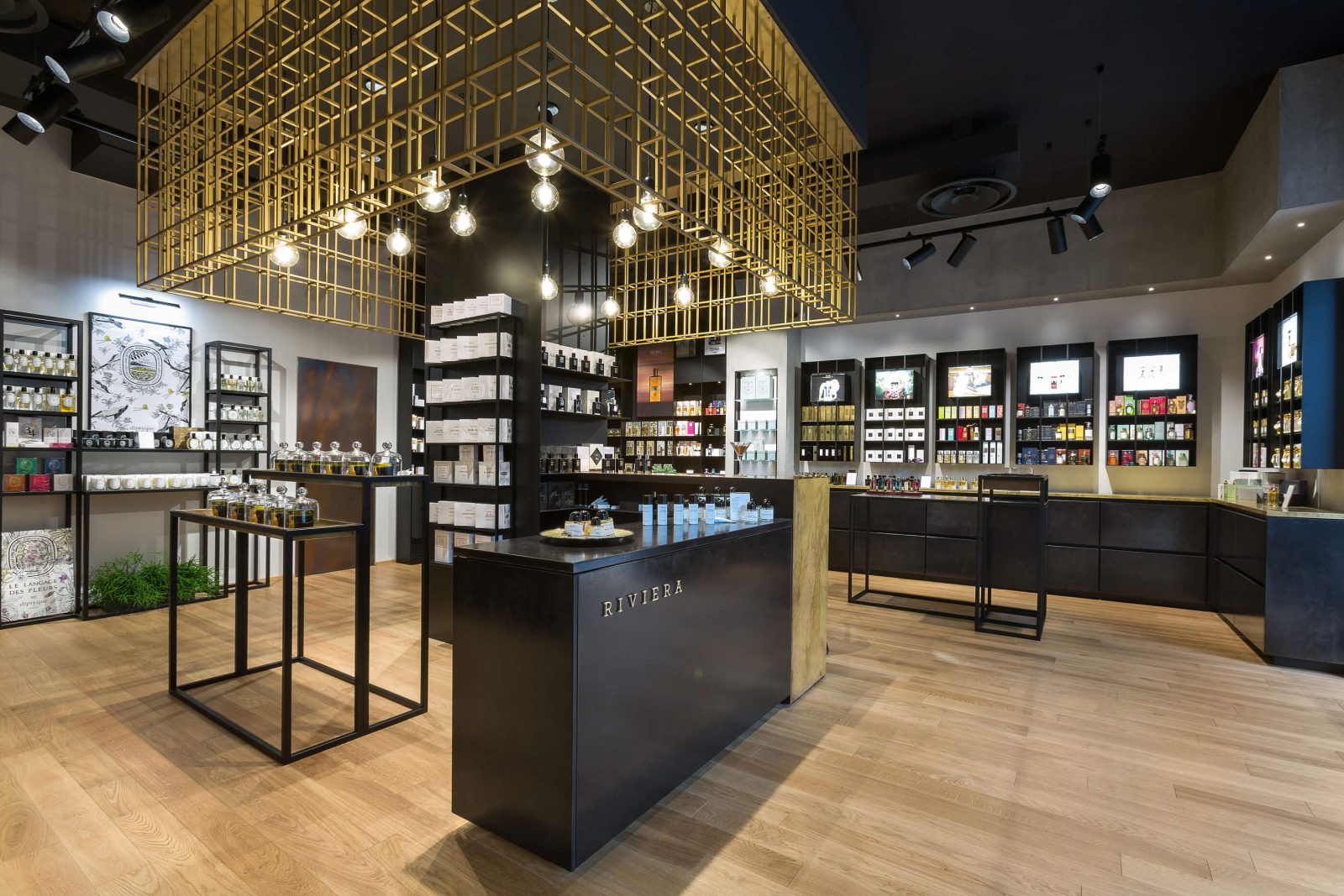
The role of finishes becomes particularly evident in projects where architectural bronze acts as a narrative element of space. In the historic Profumeria Riviera in Mestre-Venice, rough, tactile materials are paired with copper alloys treated in tones ranging from gold to bronze and black. The overall effect is an environment that mirrors the refinement of the world of artistic fragrances, with metal surfaces serving as a precious counterpoint to more textural materials. The bespoke finishes developed for the client enhance plays of light and reflection, emphasizing the elegant character of the space.
The Stilwerk Berlin Project
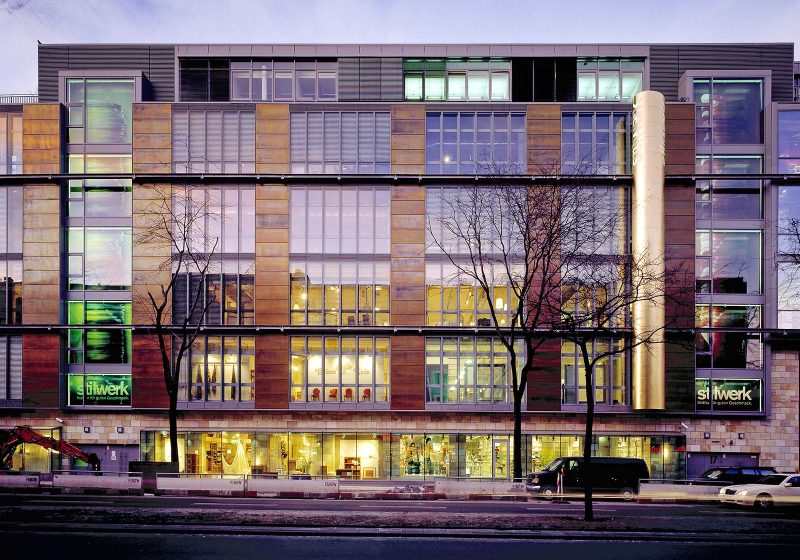
In an international context as well, copper alloy demonstrates its versatility. In Berlin, along Kantstraße, Stilwerk—a concept store dedicated to contemporary design—hosts brands and products by internationally renowned designers and stands as a reference point for an audience attuned to emerging aesthetic trends.
As part of the building’s renovation, the design brief was realized through a façade composed of rectangular copper-alloy panels, combined with insulating cladding and stainless-steel elements. A purpose-designed substructure made it possible to create a ventilated façade system with no visible fixings, enhancing the continuity of the surfaces.
Wood had originally been envisaged, but the choice of copper alloy made it possible to retain a natural aesthetic while introducing more complex chromatic vibrations. The “cloud” finish, achieved through a specific oxidation process, resulted in panels distinguished by movement and tonal variations that respond to light, giving the façade a material, ever-changing presence.
A Material in Constant Evolution
Finishes represent a field of continuous experimentation. Each new tone arises from the interaction between the inherent vitality of bronze and the desire to explore ever more sophisticated aesthetics, ensuring that the material continues to engage in dialogue with contemporary architecture while preserving a strong and unmistakable material identity.


