
When working on historic buildings or projects with highly specific design requirements, architectural bronze joinery becomes an active element within the space, capable of transforming the way environments are experienced. Thanks to advanced technologies and integration with smart home systems, doors, windows, and shading elements can open, close, or slide automatically, precisely modulating light, ventilation, and spatial perception.
This combination of premium materials and technological innovation allows for a wide range of applications: from the restoration and enhancement of historic buildings, where aesthetics and safety must coexist harmoniously, to the design of bespoke private residences, where comfort, accessibility, and seamless continuity between interior and exterior spaces are paramount.
The Royal Mansour Hotel in Casablanca
A prime example of how technology and design can integrate into complex architectural contexts is the restoration of the Royal Mansour Hotel in Casablanca. Opened in 1953 as Morocco’s first five-star hotel, it has welcomed celebrities and international visitors alike.
In this project, the joinery technology played a central role: fixed doors and windows were installed, engineered to be fire- and bullet-resistant, combining advanced security performance with refined design. The creation of custom extruded profiles allowed for a balance of lightness, strength, and mechanical precision, ensuring that each element met very strict technical requirements. Every component underwent rigorous testing in accredited laboratories in Italy and France to verify reliability, impact resistance, and compliance with international standards.
The choice of a Media bronze finish further harmonized the joinery with glass, brass, and copper, preserving the building’s historic elegance while seamlessly integrating the latest technology without compromising aesthetics.

Private Residences: Tailored Solutions for Specific Needs
Innovation in architectural bronze joinery is not limited to historic or large-scale projects; it can profoundly enhance the experience of private residences, adapting to the unique needs of each client.
In one recent Astec residential project, designed for a client with a disability, highly customized solutions were implemented, including motorized lift-and-slide doors fully integrated with smart home systems for easy and immediate control of openings. The design featured a flush floor threshold with a recessed drainage channel, improving usability and facilitating access for individuals with specific requirements. This solution merges functionality, technology, and design, creating an accessible environment without compromising the residence’s overall elegance and harmony.
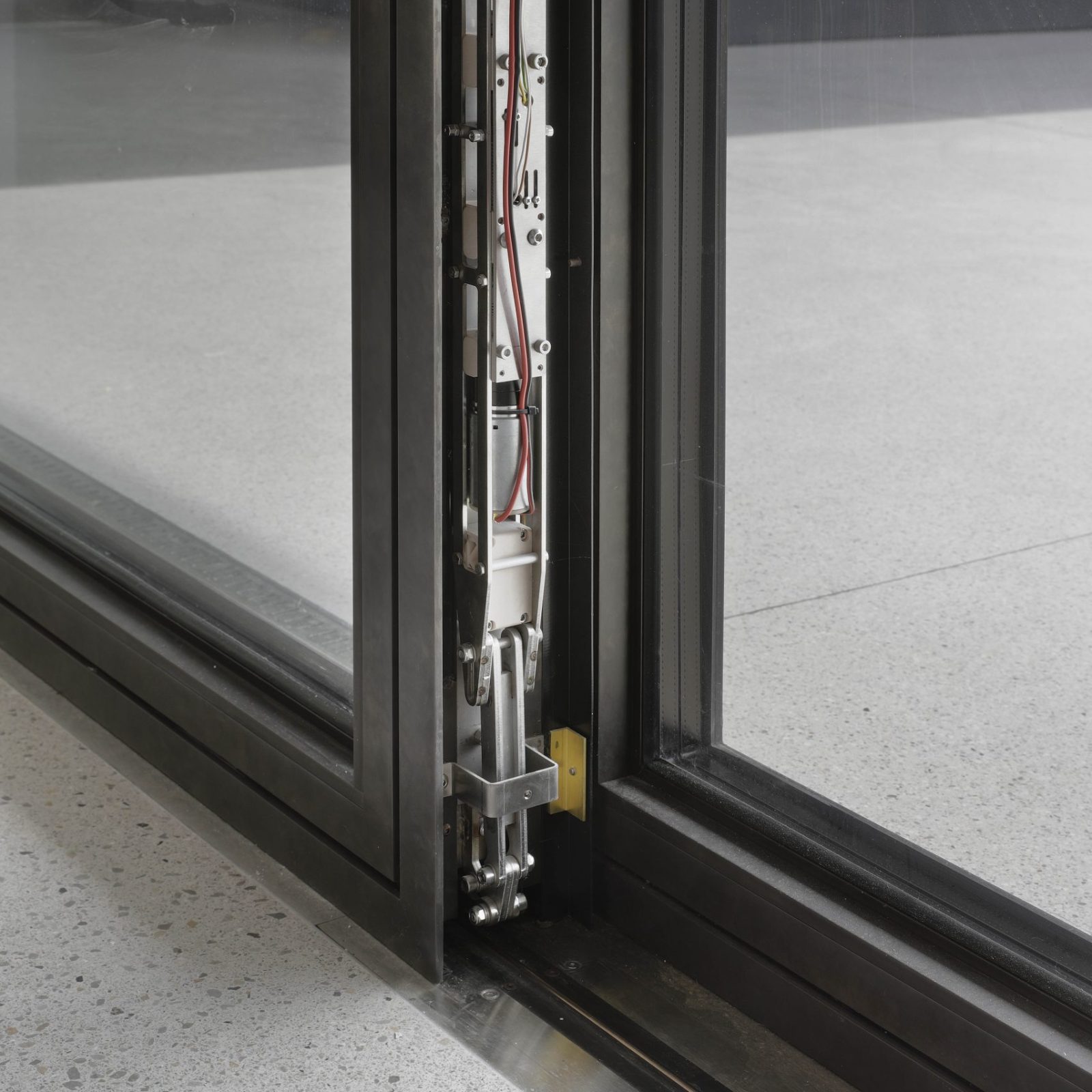
In another residential project, the standout feature is a large projecting glass panel, designed to create visual and functional continuity between interior and exterior spaces. The smooth, adjustable operation of the glazing allows for precise modulation of natural light and ventilation, expanding the perception of space and fostering a constant dialogue with the surrounding landscape. The combination of invisible technology and premium materials transforms the joinery into a true protagonist of the home, a tool that shapes daily living, influencing comfort, well-being, and the aesthetic perception of the space.
These projects demonstrate how bronze joinery can meet extremely diverse residential requirements, integrating advanced technology, safety, ergonomics, and design. A bespoke approach allows for overcoming architectural or functional constraints, making spaces more livable, flexible, and fully aligned with the overall aesthetic of the residence.


